Updated:
3 min read
Freeliancer's Infotech Team
Digital Marketing
Business Process Automation: Complete Guide
Business Process Automation is no longer a luxury reserved for large enterprises. It is an accessible way for small businesses to streamline operations, reduce repetitive work, and improve customer experiences.
By automating routine processes such as lead management, invoicing, customer support, and marketing, businesses can free up valuable time, reduce errors, and focus on strategic growth. Whether you're just beginning with a single workflow or planning a broader AI-driven transformation, investing in automation today can create lasting efficiency and scalability for the future.
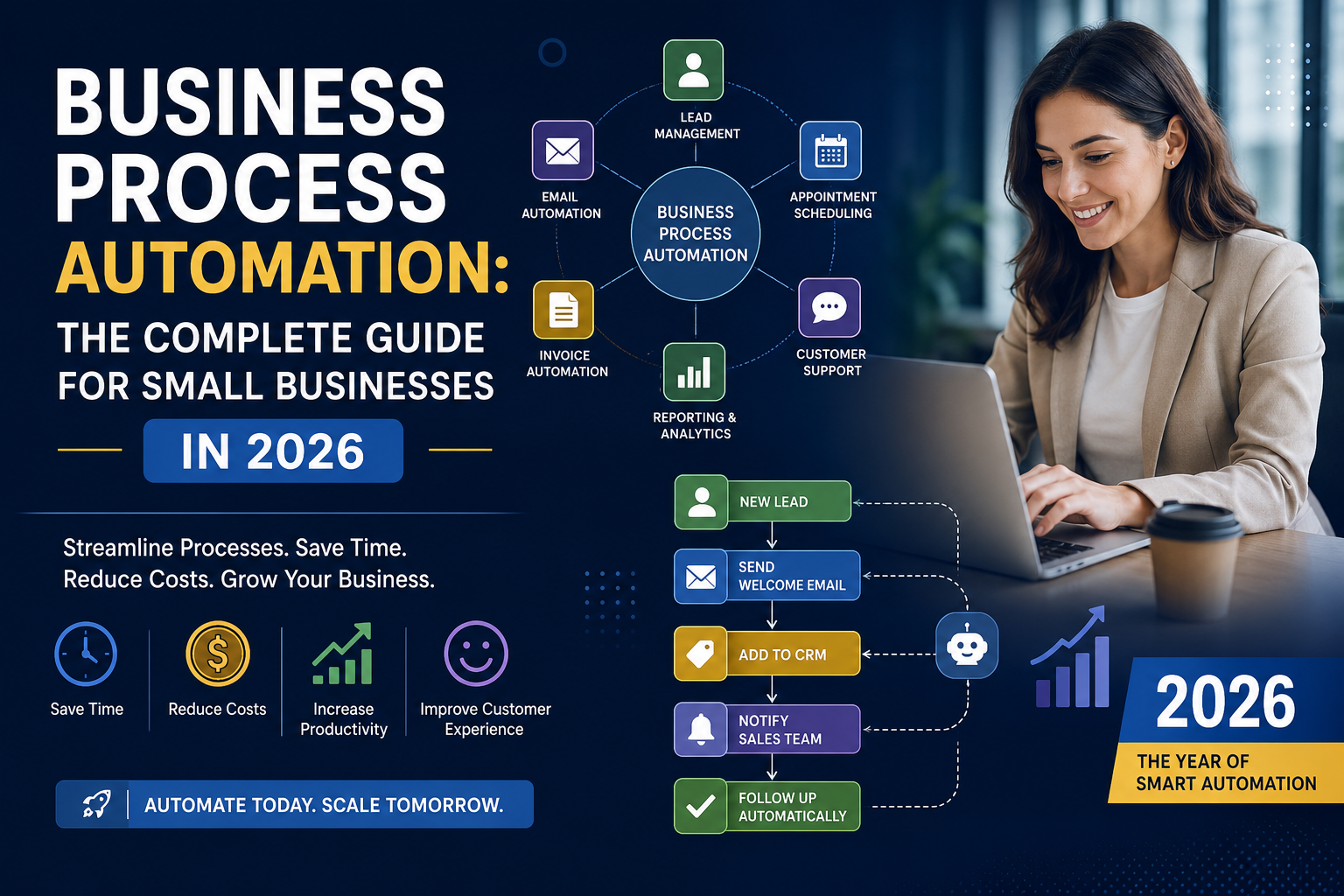
# Business Process Automation: The Complete Guide for Small Businesses (2026)
In today's fast-paced digital world, small businesses need to do more with fewer resources. Managing customer inquiries, sending invoices, following up with leads, updating CRM systems, scheduling appointments, and handling repetitive administrative tasks can consume valuable time and slow business growth. Business Process Automation (BPA) solves these challenges by using software, artificial intelligence (AI), and workflow automation to streamline daily operations, reduce manual work, and improve productivity.
Business Process Automation allows companies to automate repetitive tasks such as lead management, email marketing, customer support, invoicing, inventory management, employee onboarding, appointment scheduling, and sales follow-ups. Instead of relying on manual processes, businesses can create automated workflows that operate 24/7, improving accuracy while reducing operational costs.
Small businesses across industries—including retail, healthcare, real estate, manufacturing, professional services, and eCommerce—are increasingly adopting automation to improve customer experiences, boost employee productivity, and scale efficiently. Whether you're a startup or an established company, automation helps eliminate bottlenecks, reduce human error, and free your team to focus on strategic growth.
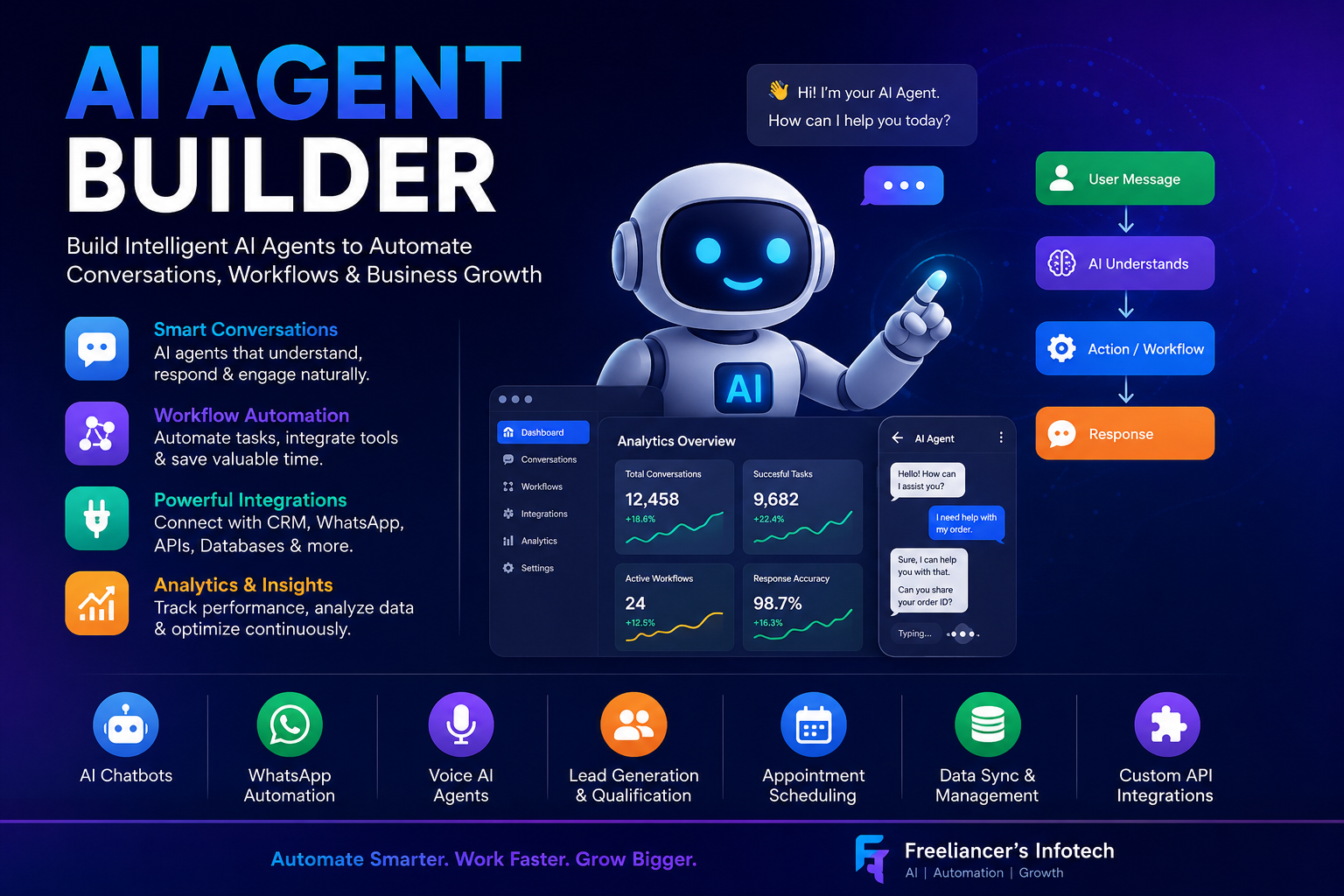
Modern automation combines traditional workflow automation with AI-powered technologies such as intelligent chatbots, AI voice assistants, predictive analytics, document processing, and machine learning. These tools can automatically respond to customer inquiries, qualify leads, generate reports, send personalized emails, update databases, and integrate multiple business applications without manual intervention.
Popular automation platforms include Zapier, Make (formerly Integromat), n8n, Microsoft Power Automate, HubSpot Workflows, Salesforce Flow, Google Workspace Automation, and custom AI solutions. Choosing the right platform depends on your business size, budget, existing software, and automation goals.
The benefits of Business Process Automation extend beyond saving time. Businesses often experience faster response times, increased customer satisfaction, improved compliance, better data accuracy, reduced operational costs, and higher revenue through streamlined workflows. Automation also enables businesses to scale without significantly increasing staffing requirements, making it one of the most cost-effective investments for long-term growth.
Implementing Business Process Automation starts by identifying repetitive tasks, mapping existing workflows, selecting the right automation tools, testing automated processes, and continuously monitoring performance. Businesses should focus on automating high-impact activities such as lead capture, CRM updates, invoice generation, customer support, marketing campaigns, inventory tracking, and employee management.
As AI continues to evolve, automation is becoming more intelligent and accessible for businesses of all sizes. Companies that embrace automation today are better positioned to improve efficiency, deliver exceptional customer experiences, reduce costs, and remain competitive in an increasingly digital marketplace.
Whether you are looking to automate sales, marketing, finance, HR, operations, or customer service, Business Process Automation provides the foundation for building a smarter, faster, and more scalable business. Investing in automation today helps organizations increase productivity, improve decision-making, and achieve sustainable growth in the years ahead.
Key Points
1. Introduction
What is Business Process Automation (BPA)?
Why automation is important in 2026
Statistics about automation adoption
Benefits for startups and SMEs
What readers will learn
2. What Is Business Process Automation?
Definition
How BPA works
Difference between BPA and task automation
Manual vs automated processes
3. Why Small Businesses Need Automation
Save time
Reduce costs
Increase productivity
Eliminate repetitive work
Improve customer experience
Scale operations
4. Types of Business Process Automation
Workflow automation
AI automation
Robotic Process Automation (RPA)
Marketing automation
Sales automation
CRM automation
HR automation
Finance automation
Inventory automation
Customer support automation
Frequently Asked Questions
Business Process Automation uses software and technology to automate repetitive tasks, improve efficiency, and reduce manual work.
BPA increases productivity, reduces errors, lowers costs, improves accuracy, and speeds up business operations.
Businesses can automate invoicing, HR, customer support, CRM, inventory, marketing, approvals, and reporting.
Yes. BPA helps small businesses save time, improve efficiency, and scale operations without increasing staffing costs.
BPA automates entire business workflows, while RPA focuses on automating repetitive rule-based tasks.
Yes. AI enhances automation by enabling intelligent decision-making, predictive analytics, and smart customer interactions.
The cost depends on the complexity of the workflows, software, integrations, and business requirements.
Manufacturing, healthcare, retail, finance, logistics, education, and professional services benefit significantly from BPA.
Implementation can take from a few weeks to several months, depending on the size and complexity of the project.
Freeliancer's Infotech delivers custom workflow automation, AI solutions, CRM integration, ERP systems, and business process optimization.
Business Process Automation is no longer a luxury reserved for large enterprises. It is an accessible way for small businesses to streamline operations, redu...