
The Future of IT Support in the USA: Why Managed IT Services Drive Business Success
Published by Freelancer's Infotech Team | Category: Digital Marketing & Information Technology
Introduction: The Changing Paradigm of Business Technology in the United States
In today’s hyper-connected, fast-paced business ecosystem, technology is no longer just a secondary support function tucked away in a server room—it is the central engine driving growth, operational efficiency, and competitive advantage. Modern American enterprises, from lean tech startups in Austin to sprawling manufacturing firms in Ohio and financial institutions in New York, rely entirely on robust, secure, and highly available digital systems to function daily.
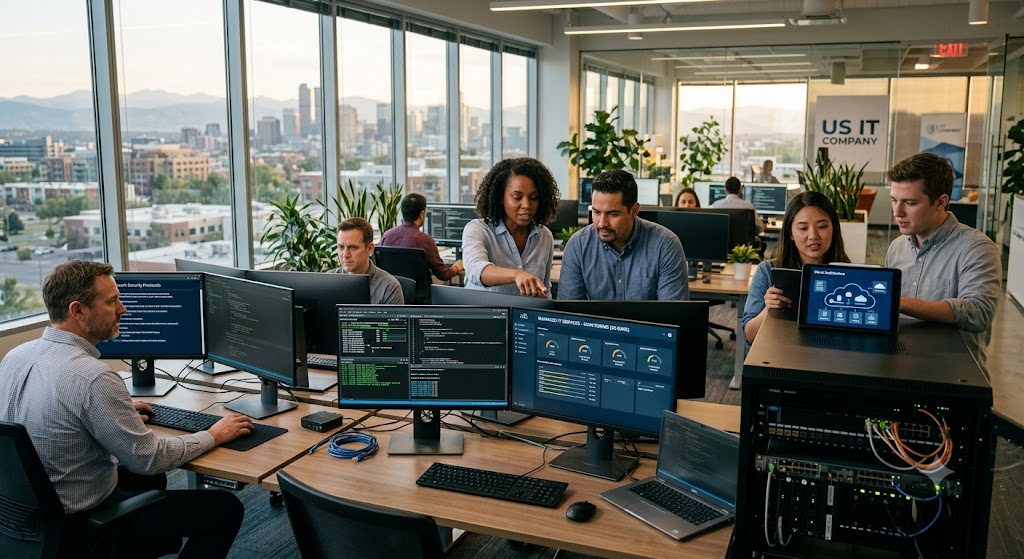
However, maintaining a fast, secure, and resilient technology infrastructure requires continuous expertise, cutting-edge tools, and 24/7 vigilantly managed oversight. As cyber threats become more sophisticated and cloud architectures become increasingly complex, internal teams often find themselves overwhelmed by routine maintenance, leaving little room for strategic innovation. This is precisely where partnering with a dedicated, highly qualified US-based IT company becomes an invaluable competitive asset.
Transitioning from reactive troubleshooting to modern managed IT services enables business leaders to shift their focus away from constant technical fires and direct their energy toward core revenue-generating goals, market expansion, and superior customer service.
Understanding Managed IT Services vs. The Legacy "Break-Fix" Model
To truly understand the value of modern IT support services, one must contrast it with the traditional, legacy model of technology maintenance commonly referred to as the "break-fix" approach.
The Hidden Costs of the Break-Fix Model
For decades, small and medium-sized businesses (SMBs) in the USA relied on break-fix contractors. Under this model, an IT company was called only when something stopped working—a server crashed, an email domain went down, or a workstation was infected with malware. While this appeared economical on paper because there was no recurring retainer fee, it created significant hidden risks:
- Unpredictable Expenses: A single catastrophic network failure or ransomware event could lead to massive, unexpected invoices for emergency remediation.
- Severe Operational Downtime: Because no active monitoring was in place, issues were only discovered after critical business operations had already ground to a halt.
- Misaligned Incentives: In a break-fix agreement, the service provider profits when your systems fail. The more technical problems you experience, the more revenue they generate.
The Managed IT Services Advantage
Modern managed IT support completely flips this dynamic on its head through a subscription-based, proactive partnership model. Under a Managed Service Provider (MSP) framework:
- Proactive Prevention: Systems are monitored remotely 24 hours a day, 7 days a week, 365 days a year. Bugs, software vulnerabilities, disk failures, and network bottlenecks are identified and resolved before they disrupt your workforce.
- Predictable Budgeting: Businesses pay a fixed, flat-rate monthly fee covering all routine maintenance, helpdesk support, and security updates, allowing financial officers to accurately forecast IT expenditure.
- Aligned Goals: Your IT partner prospers when your systems run smoothly, securely, and without interruption. Their primary incentive is to prevent problems, not charge you to fix them after the damage is done.
The 5 Pillars of Modern US IT Infrastructure
To establish a future-proof, scalable operational footprint in the American marketplace, corporate technology strategies must be constructed around five key operational pillars:
1. Proactive Managed IT Support & 24/7 Helpdesk
Downtime is the silent killer of productivity. When employees encounter technical glitches, locked accounts, or software incompatibilities, billable hours are lost. A dedicated US-based IT support team offers rapid-response helpdesk services staffed by certified engineers who understand local industry nuances and business hours. With centralized remote desktop access and real-time remote monitoring and management (RMM) software, over 90% of user issues are diagnosed and fixed within minutes without requiring an engineer on-site.
2. Enterprise-Grade Cybersecurity & Threat Intelligence
Cybercrime has evolved into a multi-billion-dollar shadow industry, with US businesses being targeted more than ever before. Small and medium enterprises are often targeted specifically because cybercriminals assume their defenses are weaker than enterprise conglomerates. Modern security requires a multi-layered defense-in-depth posture:
- Zero-Trust Architecture & MFA: Implementing Multi-Factor Authentication (MFA) and granular permissions ensures that compromised credentials alone cannot grant access to sensitive corporate networks.
- Endpoint Detection and Response (EDR): Leveraging artificial intelligence and machine-learning algorithms to detect unauthorized behavior and isolate infected laptops or servers within seconds.
- Data Encryption: Encrypting corporate data both in transit and at rest to ensure that intercepted packets or lost devices do not result in exposed customer information.
- Employee Security Awareness Training: Conducting simulated phishing attacks and regular training to transform staff from vulnerable attack surfaces into a human firewall.
3. Cloud Computing & Infrastructure Optimization
The modern workforce is no longer confined to a physical office building. Hybrid work environments require continuous, fast, and secure access to business applications from anywhere in the world. Leading cloud computing solutions—including Microsoft Azure, Amazon Web Services (AWS), and custom private cloud environments—allow companies to retire expensive, aging on-premise hardware in favor of agile, highly scalable cloud architectures.
4. Backup, Data Preservation & Disaster Recovery (BDR)
Data loss can quickly devastate an enterprise. Whether caused by natural disasters, physical hardware failures, insider threats, or encryption-based ransomware attacks, missing critical operational data halts revenue generation and damages brand reputation. A comprehensive disaster recovery solution creates automated, immutable off-site and cloud backups, ensuring near-instantaneous Recovery Time Objectives (RTO) and Recovery Point Objectives (RPO).
5. Regulatory Compliance & IT Governance
US businesses across various verticals face stringent regulatory frameworks governing data privacy and security. Partnering with a specialized IT company in the USA ensures that your cloud environments, networks, and storage systems comply with strict legal requirements, including:
- HIPAA / HITECH: Protecting patient health records for medical providers and health tech companies.
- PCI-DSS: Safeguarding payment card transactions and financial data for e-commerce and retail merchants.
- SOC 2 Type II: Verifying data management controls for software-as-a-service (SaaS) and technology platforms.
- CMMC / NIST: Ensuring defense contractors and government vendors adhere to strict cybersecurity standards.
Comparing In-House IT vs. Managed Service Partners
Many growing companies eventually face a crucial structural decision: Should we continue hiring internal IT personnel, or should we partner with an established Managed Service Provider?
While having an internal IT director or chief technology officer is valuable for high-level strategy, attempting to manage daily support, network administration, cloud architecture, and enterprise cybersecurity purely in-house is often inefficient and cost-prohibitive.
| Comparison Factor | In-House IT Department | US Managed IT Service Partner |
|---|---|---|
| Cost Structure | High & Variable (Multiple high salaries, benefits, health insurance, ongoing training, software licensing fees). | Predictable & Scalable (A flat monthly fee tailored specifically to user seat count or active devices). |
| Depth of Expertise | Limited (Constrained by the specific skill set and past experience of 1–3 internal staff members). | Expansive (Immediate access to a full team of network engineers, cloud architects, and security specialists). |
| Coverage & Availability | Vulnerable (Unmonitored during night hours, weekends, sick leave, employee turnover, or staff vacations). | 24/7/365 Continuous Oversight (Automated threat detection, continuous monitoring, and round-the-clock helpdesk support). |
| Scalability & Agility | Slow (Scaling up requires lengthy recruitment drives, interview cycles, onboarding, and training costs). | Instantaneous (New users, workstations, software instances, and cloud resources can be provisioned in minutes). |
| Tooling & Infrastructure | Capital Intensive (Requires purchasing expensive corporate RMM, PSA, EDR, and SIEM monitoring software licenses). | Included (Access to enterprise-class management platforms integrated directly into your service tier). |
How a US IT Company Powers Digital Transformation
Beyond maintaining uptime and resolving technical tickets, an expert IT partner acts as a virtual Chief Information Officer (vCIO), helping your enterprise navigate complex digital transformation initiatives.
1. Strategic Technology Roadmapping
Technology shifts rapidly. A dedicated vCIO conducts quarterly technology reviews, analyzing your current software applications, hardware lifecycles, and network topologies. They craft a long-term technology roadmap that aligns future IT investments directly with business expansion goals, ensuring capital is never spent on redundant software or outdated hardware.
2. Streamlined Remote & Hybrid Work Models
The shift toward remote and hybrid workforces in the United States requires modern identity management solutions. By deploying cloud-based directory services (like Microsoft Entra ID), secure virtual private networks (VPNs), and cloud-hosted VoIP phone systems, an IT partner enables employees to work securely and efficiently from any home office or mobile device.
3. Optimizing Software Stack & Vendor Management
Managing multiple technology vendors—Internet service providers, hardware suppliers, software licensing teams, and phone vendors—can waste dozens of hours every month. A managed IT service partner takes over vendor management completely, acting as your single point of contact to resolve vendor disputes, streamline licensing costs, and negotiate corporate discounts on your behalf.
Actionable Checklist: Choosing the Right US IT Partner
Not all technology providers offer the same level of expertise, response speeds, or customer care. When evaluating prospective US-based IT service providers, demand clarity on the following metrics:
- Guaranteed Response Times (SLAs): Look for service level agreements that guarantee critical response times within 15 to 30 minutes for urgent system outages.
- Comprehensive Cybersecurity Offerings: Ensure their service packages include proactive threat hunting, endpoint protection, and backup management rather than treating security as an expensive add-on.
- Dedicated Account Management: Confirm that you will be assigned a dedicated account manager and vCIO rather than being passed around to generic call centers.
- Transparent Costing: Avoid providers with vague contracts full of hidden fees for after-hours work or specialized software installations. Demand clear, all-inclusive pricing schedules.
- Verified Industry Experience: Select a provider with a proven track record of supporting companies in your specific industry sector, ensuring full awareness of your unique software stacks and compliance rules.
Conclusion: Transform Your Business Technology Roadmap Today
Navigating digital transformation and maintaining operational security does not have to be an overwhelming or chaotic experience. By partnering with an experienced, proactive US-based IT company, your business gains access to state-of-the-art infrastructure management, enterprise-grade cybersecurity defenses, and continuous strategic guidance—all at a fraction of the cost of building an equivalent internal team.
Empower your workforce with technology that works seamlessly, scale your cloud footprint with confidence, and protect your digital assets against modern cyber threats. Modernize your IT posture today and unlock the full growth potential of your enterprise.
Ready to elevate your technology infrastructure? Contact the expert engineering team at Freelancer's Infotech today to schedule your comprehensive IT assessment and discover tailored managed services built for your business growth.